
Do Calming Dog Beds Really Deliver Deep Pressure Therapy?

Last Updated: October 25, 2026
Quick Summary
Deep pressure therapy for dogs uses steady, gentle physical pressure to help a dog settle, delivered through weighted blankets, firm hugs, a dog leaning against you, or a calming bed the dog chooses to enter. It works best for mild to moderate stress, and the evidence in dogs is thin, so treat it as one tool rather than a cure.
- Pressure sends signals through the skin that can slow a dog's breathing and help it settle.
- Keep training sessions under five minutes at first and end every session on a good note.
- Never force a dog into position; a dog that turns away, lip licks, or freezes is asking for space.
- Flat-faced breeds like Bulldogs, Pugs, and Boston Terriers need extra care because their airways are already compromised.
- Log stress scores from 1 to 5 before and ten minutes after pressure for two weeks to judge results.
Table of Contents
- What Deep Pressure Therapy Actually Does for Dogs
- Deep Pressure Therapy for Dog Anxiety: What the Research Suggests
- Deep Pressure Therapy Dog Training: Teaching a Safe Trained Behavior
- Deep Pressure Therapy Safety for Dogs: Consent, Welfare, and When to Stop
- Calming Dog Beds: A Practical Alternative When Training Isn't an Option
- How to Tell Whether Deep Pressure Is Actually Helping Your Dog
- Finding the Right Calming Bed for Your Dog at SNUGGLES Cove
- Frequently Asked Questions
What Deep Pressure Therapy Actually Does for Dogs
Deep pressure therapy for dogs is the use of steady, gentle physical pressure to help a dog settle.
At SNUGGLES Cove, we hear from anxious pet parents every week. Most have tried a dozen things. Few understand why pressure works at all.
Here is the short version. Firm, even pressure sends signals through the skin to the nervous system. Many dogs respond by slowing their breathing and settling into place.
How Pressure and Warmth Affect the Nervous System
Pressure and warmth work together. Gentle pressure on the body can lower arousal in many animals, and warmth adds a second layer of comfort.
That instinct explains a lot. For dogs that like to burrow, a cave-style bed with a hood that stays open mimics that natural preference without trapping the dog.
The effect varies by dog. Some melt under a hand on their back. Others tense up and move away. Both reactions are normal.
Deep Pressure Therapy for Dog Anxiety: What the Research Suggests
Honest answer: the evidence for deep pressure therapy in dogs is thin. Most published work focuses on people, not pets.
That does not make it useless. It means you should treat DPT as one tool, not a cure.
What we can say with confidence:
- Many owners report calmer behavior during storms, vet visits, and car rides
- Pressure seems to help most in mild to moderate stress, not panic
- Results depend heavily on the individual dog
If your dog's anxiety is severe, talk to your vet first. You can read more on calming an anxious dog during thunderstorms for a practical walkthrough.
Deep Pressure Therapy Dog Training: Teaching a Safe Trained Behavior
You can teach a pet dog a pressure behavior without a service dog vest. The method is the same: reward the dog for choosing to lean or lie against you, then build duration slowly.
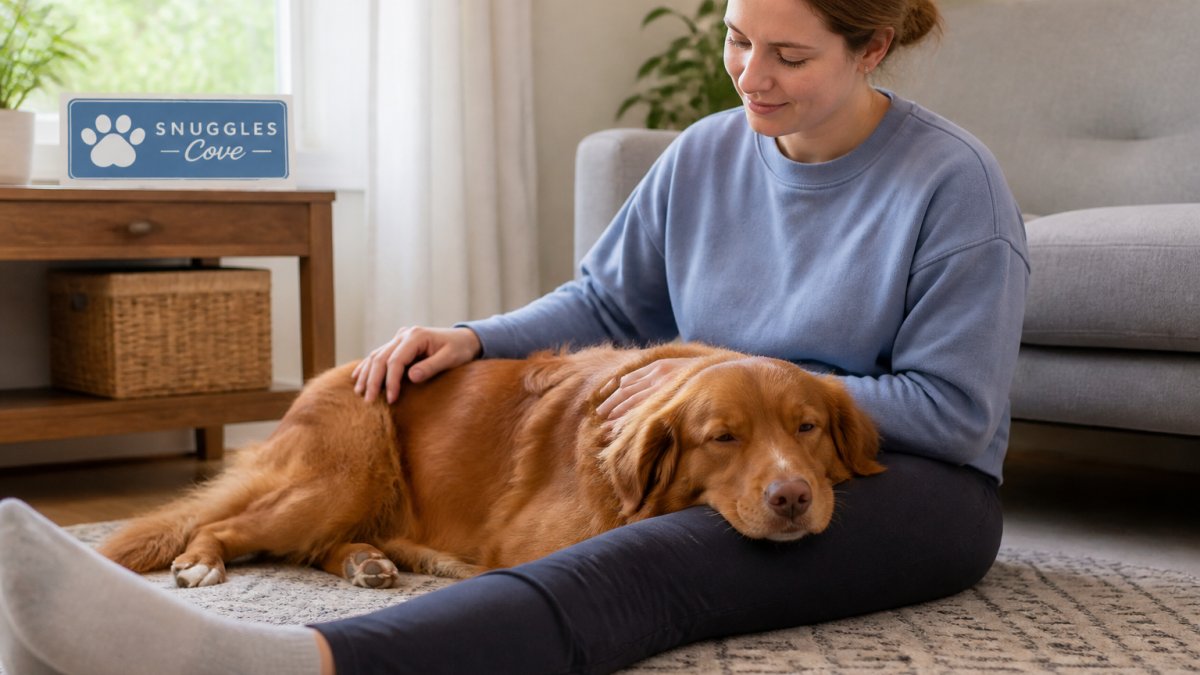
A few ground rules before you start:
- Never force the dog into position
- Keep sessions short, under five minutes at first
- End every session on a good note
Step-by-Step: Building the Behavior Without Force
- Set the stage. Sit on the floor with treats and a mat. Let the dog come to you. Do not call the dog, wait for curiosity.
- Capture contact. Reward any contact: a lean, a paw, a head rest on your leg. Mark with a clicker or a verbal "yes" the moment the dog offers weight.
- Shape for pressure. Wait for more weight against your body before treating. If the dog only touches lightly, reward that first, then wait for a firmer lean. Split the behavior into small increments.
- Add duration. Reward two seconds of leaning, then four, then eight. Count silently; if the dog breaks before your count, you asked for too much. Shorten the next rep.
- Introduce a hand cue. Rest a flat hand on the dog's back and treat calm behavior. The hand becomes a predictor of reward, not a restraint.
- Pair a verbal cue. Once the behavior is reliable with the hand cue, say "settle" or "press" just before the dog leans, then reward. Repeat until the word alone prompts the lean.
- Generalize slowly. Practice in calm settings first, then in mildly distracting ones, a different room, a quiet park, a friend's house. Change one variable at a time.
- Proof against triggers. Once the behavior is solid, practice during low-level triggers (a distant thunder recording, a visitor at the door) before expecting it during a real storm.
Pet-Trained Behavior vs. Service Dog Tasks
A pet dog can learn to lean or lie across your lap, and that can be genuinely calming. But it is not the same as a service dog task.
If you need a service dog, work with a qualified trainer who specializes in assistance dogs. If you want a comforting behavior at home, the steps above are a safe starting point.
Common Training Mistakes
- Luring with treats into position. This teaches the dog to follow food, not to offer pressure. Capture and shape instead.
- Pushing past stress signals. A dog that is pushed will learn that pressure predicts discomfort, not relief.
- Training only in one location. Dogs do not generalize well; practice in several rooms and at different times of day.
For a broader look at calming an anxious dog during thunderstorms, see our practical walkthrough on calming an anxious dog during thunderstorms.
Deep Pressure Therapy Safety for Dogs: Consent, Welfare, and When to Stop
Safety comes down to consent. A dog cannot say "enough," so you have to watch for the signs. A dog that turns its head away, licks its lips, or freezes is asking for space. The difference between calming pressure and aversive pressure is whether the dog chose it and can leave.
Reading Consent and Stress Signals
Stop immediately if you see:
- Stiff body or tucked tail
- Pulling away or hiding
- Panting with no heat or exercise
A dog that shuts down may look "calm" but is not relaxed. Look for loose body language, slow blinking, and a dog that stays by choice. If the dog leaves, let it go, do not coax it back. Coaxing teaches the dog that its "no" is ignored.
Physical Safety Limits
Physical safety matters too. Never pile weight on a dog. Never cover the face or restrict breathing. Never use pressure on a dog with injuries, heart conditions, or breathing problems without vet approval.
Consider the dog's size and your own health. A large dog leaning across your lap may be comforting to you but uncomfortable or unsafe for the dog if it cannot shift position.
When Not to Use Deep Pressure Therapy
Skip DPT or get professional advice if:
- The dog has a medical condition affecting breathing, circulation, or the spine
- The dog has a history of handling sensitivity or bite risk
- The handler has a medical condition where added weight or pressure is contraindicated
When to Seek Professional Advice
If your dog's anxiety is severe, talk to your vet first. Pressure alone will not fix a serious fear or a medical issue. A certified veterinary behaviorist or a qualified dog trainer can help you assess whether DPT is appropriate and how to implement it safely.
For a practical walkthrough on calming an anxious dog during thunderstorms, see our guide on calming an anxious dog during thunderstorms.
Calming Dog Beds: A Practical Alternative When Training Isn't an Option
Not every owner has time to train a behavior. Not every dog tolerates handling. That is where calming dog beds earn their place.
A calming bed works on the same principles: warmth, cover, and gentle contact. The dog chooses to go in. That choice is the consent.
What to look for in a calming bed:
- A hood or bolster that holds its shape
- Soft, breathable fabric
- A base that supports joints
The hood matters more than people think. If you want to compare approaches before deciding, our breakdown of calming beds versus white noise for dog anxiety covers the trade-offs.
How to Tell Whether Deep Pressure Is Actually Helping Your Dog
Measure it. Gut feeling is unreliable, and anxious dogs can look calm while still stressed.
Try a simple log for two weeks:
- Note the trigger (storm, guests, vet visit)
- Rate your dog's stress from 1 to 5 before
- Apply the pressure method
If scores drop and stress signals fade, it is working. If nothing changes, or your dog avoids the bed or the contact, it is not.
A common mistake is assuming sleep equals success. A dog that shuts down is not relaxed.
A simple two-week log makes it easier to judge whether pressure is actually helping your dog.
| What to log | What to record | Note |
|---|---|---|
| Trigger | Storm, guests, or vet visit | Note the event |
| Stress before | Rate from 1 to 5 | Before applying pressure |
| Pressure method | Apply the chosen method | Then wait ten minutes |
| Stress after | Rate again from 1 to 5 | After ten minutes |
| Stress signals | Note any seen during | Watch for shutdown signs |
| Result | Scores drop and signals fade | Means it is working |
| No change | Dog avoids bed or contact | Means it is not working |
Finding the Right Calming Bed for Your Dog at SNUGGLES Cove
The right bed is the one your dog picks. Our approach at SNUGGLES Cove is built on that idea. The SNUGGLES Cove bed has a reinforced plush hood that stays open, so your dog gets cover without feeling trapped.
One customer put it plainly: "The hood actually stays open! Every other bed we tried flopped over."
If your dog needs more than a bed, the PUPSICLE enrichment toy keeps a busy mind occupied with long-lasting frozen treats.
Frequently Asked Questions
Does deep pressure therapy work on dogs?
It can help some dogs, but the evidence is largely anecdotal and based on individual response. Deep pressure therapy works by applying gentle, even pressure and warmth that may support nervous system regulation and emotional regulation in dogs experiencing anxiety, stress, or sensory overload. Some dogs visibly relax, lean in, or settle faster, while others show no change or dislike the contact. Watch your dog's body language closely: a dog that leans in, softens its eyes, or sighs is likely comfortable, while one that pulls away, stiffens, or lip-licks is telling you to stop.
Can a calming dog bed provide deep pressure therapy?
A calming dog bed offers a related but different benefit. It provides warmth, physical contact, and a secure enclosed space that supports relaxation and self-regulation, but it does not apply the deliberate, trained pressure of a deep pressure therapy task. For dogs that find gentle enclosure calming, a bed with a reinforced hood that stays open, like the SNUGGLES Cove, gives them a protected environment they can retreat to on their own terms. Think of it as sensory support rather than a clinical task.
Is deep pressure therapy safe for every dog?
No. Deep pressure therapy safety for dogs depends on the individual. Avoid it with dogs that have pain, joint issues, recent injuries, or respiratory problems, and never apply pressure to the chest, throat, or abdomen. Puppies, seniors, and dogs with medical conditions should be cleared by a veterinarian first. Always let the dog choose: if your dog moves away, stiffens, or shows stress signals, stop immediately. A trained behavior should always be built on consent, not restraint.
How can you tell whether a dog finds gentle pressure calming?
Watch for voluntary signals. A dog that enjoys pressure will lean into your hand, settle closer, soften its gaze, sigh, or fall asleep. A dog that dislikes it will pull away, stiffen, turn its head, yawn, lip-lick, or try to leave. Start with a light hand resting on the shoulder or back for a few seconds, then release and see if your dog stays or moves closer. Repeat short sessions and track the response over a week; consistent relaxation signals suggest the behavior is helping.
Anxious dogs need calm, consistent support, and the right setup makes a real difference. Explore the SNUGGLES Cove calming bed to give your dog a warm, protected space it can choose for itself. With a hood that holds its shape, washable covers, and sizes for every breed, it is a simple place to start.

