
How to Calm an Anxious Dog During Thunderstorms

Table of Contents
- Why Thunderstorms Trigger Fear in Dogs
- Dog Anxiety Signs During Thunderstorms: What to Watch For
- Step 1: Create a Safe Space for Dogs During Storms
- Step 2: Reduce Noise and Flashes Before the Storm Hits
- Step 3: Comfort Your Dog Without Reinforcing Fear
- Step 4: Choose Calming Products for Dogs With Anxiety
- Step 5: Desensitization Training for Thunderstorm Fear Between Storms
- When to Call Your Vet About Storm Anxiety
- Frequently Asked Questions
Last Updated: October 17, 2026
Why Thunderstorms Trigger Fear in Dogs
A dog who panics during a storm is not being dramatic. Thunderstorm anxiety in dogs is a real fear response, and it often gets worse with age if nothing changes.
The triggers stack up fast. Barometric pressure drops before you hear any thunder. Wind shifts. Static electricity builds in the air and in your dog's coat. Then comes the noise, and the flashes.
Many dogs react to the pressure change alone, well before the first rumble. That is why your dog may start pacing while the sky still looks calm.
At SNUGGLES Cove, we hear from pet parents who dread storm season every year.

Dog Anxiety Signs During Thunderstorms: What to Watch For
Knowing the dog anxiety signs during thunderstorms helps you act early. Early action is far easier than calming a dog mid-panic.
Watch for these signs of distress:
- Pacing and restlessness
- Panting when it is not hot
- Trembling or shaking
- Hiding under furniture or in closets
- Whining or barking at the noise
- Clingy behavior, following you room to room
- Destructive behavior, like chewing door frames
- Escape attempts, digging at doors or fences
Some dogs go quiet instead. A dog who freezes and stares may be just as scared as one who howls.
Keep a simple log of what you see and when. Over a few storms, patterns appear, and patterns make the next steps much easier.
Step 1: Create a Safe Space for Dogs During Storms
A safe space for dogs during storms is a quiet, enclosed spot where your dog chooses to settle.
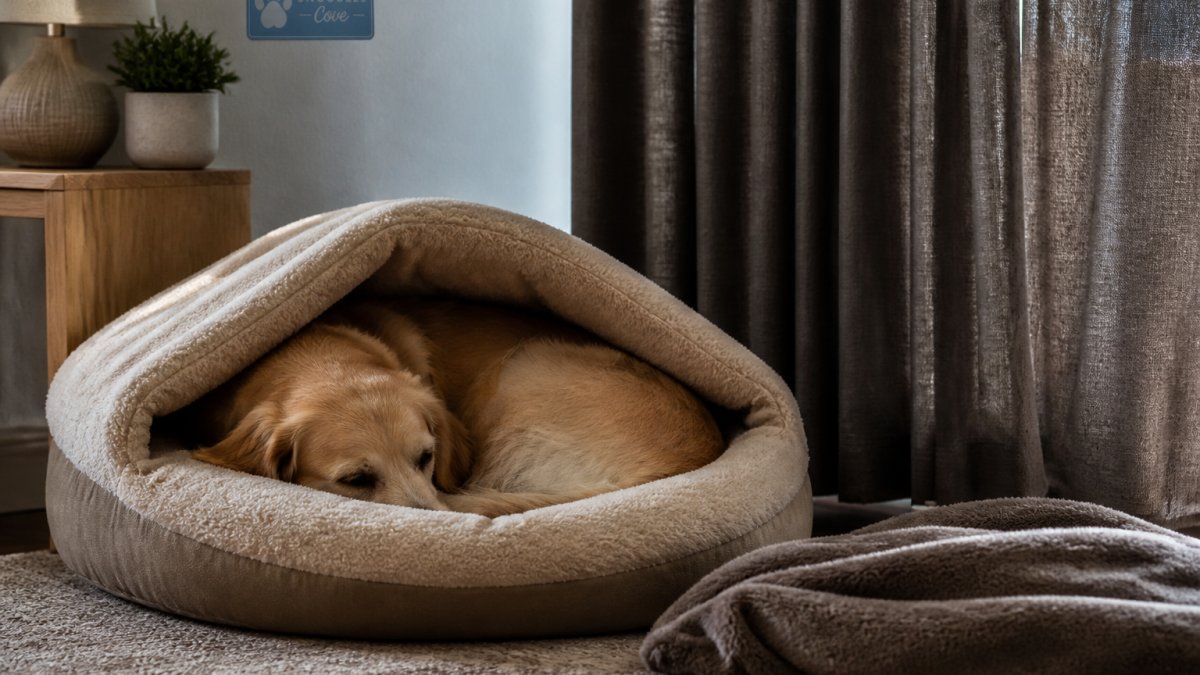
Set it up before storm season, not during a panic. Options include:
- A crate with a blanket over the top, door left open
- A quiet room or walk-in closet
- A corner away from glass doors and loud rooms
- A hooded or cave-style bed that keeps its shape
That last point matters more than most guides admit. A common mistake is buying a cave bed whose hood flops shut or collapses after a few weeks.
Our SNUGGLES Cove bed was built around this exact problem. The reinforced plush hood stays open, so your dog can burrow in but still see out.
Let your dog pick the spot if they already have a favorite. Follow your dog's lead, then make that spot better.
Step 2: Reduce Noise and Flashes Before the Storm Hits
Start reducing noise and light before the storm arrives, not after. Dogs sense storms early, so early prep works better.
Try these:
- Close windows and curtains in the room your dog uses
- Turn on the TV, radio or a fan for steady background noise
- Run a white noise machine near the safe space
- Keep lights on low to soften lightning flashes
- Stay in the room with your dog if that helps them settle
A steady, familiar sound masks the booms far better than silence. Talk radio or a nature documentary works well for many dogs.
Do this the moment you see a forecast, and your dog has a head start before the fear response kicks in.
Step 3: Comfort Your Dog Without Reinforcing Fear
Comfort is one of the simplest ways to calm an anxious dog during a storm. You cannot reinforce fear with affection, and the old advice to ignore a scared dog is outdated.
🐾 The SNUGGLES Cove™ The #1 Winter Solution For Pets! →
Here is what actually helps:
- Use a gentle voice and calm, slow movements
- Offer quiet affection if your dog seeks it out
- Try a calming massage along the back and shoulders
- Sit nearby without forcing contact
- Let your dog hide if that is what they choose
Follow your dog's lead. A dog who wants to lean on you should be allowed to. A dog who wants space should get it.
What most guides miss is this: your own stress travels. If you are tense and shouting at the weather, your dog notices. Stay calm, and your dog has a model to copy.
Step 4: Choose Calming Products for Dogs With Anxiety
Calming products for dogs with anxiety can help, but they are support tools, not cures. The honest problem with this category is that evidence varies widely, marketing outruns data, and no single aid works for every dog. So instead of a shopping list, use a selection framework.
A simple way to choose
- Match the product to the reaction. Body-based fear (trembling, freezing, pressing against you) often responds to pressure. Noise-triggered alertness may respond to sound masking. General restlessness may respond to scent or chews. Pick one target symptom first.
- Check the mechanism. Ask what the product actually does, pressure on the body, pheromone signaling, scent, distraction, or ingestion. If the seller cannot explain the mechanism plainly, treat claims with caution.
- Test on a calm day. Introduce any new product when there is no storm, so you learn your dog's response before you need it to work.
- Change one thing at a time. If you add a vest, a diffuser, and a chew in the same storm, you will not know which helped.
- Track the result. Note the product, timing, dose or duration, and your dog's response in your log. Two or three storms give you a real read.
How the main options compare
| Product Type | Best For | How to Use It | Evidence Notes |
|---|---|---|---|
| Anxiety vest or calming shirt | Body-based fear, trembling | Put on 20-30 minutes before the storm | Widely used; response is individual, so test first |
| Pheromone sprays and diffusers | General stress, mild cases | Spray bedding or plug in near the safe space | Commonly recommended by vets; results vary by dog |
| Calming chews | Dogs who settle with food | Offer before the storm starts | Formulas differ; check ingredients with your vet |
| Herbal options (chamomile, valerian root) | Mild restlessness | Check with your vet first | Limited and mixed evidence; dosing matters |
| CBD oil | Some dogs, unclear evidence | Ask your vet before trying | Evidence is still emerging; product quality varies |
| Enrichment toys | Distraction and engagement | Freeze treats ahead of time | Low risk, useful as a complement to other tools |
A few honest notes. Lavender and chamomile are popular, but results differ and neither replaces a behavior plan. Distraction still counts: a long-lasting frozen treat toy can hold a dog's attention through the worst of a storm. Our PUPSICLE is designed for exactly this, a reusable enrichment toy designed to keep your dog happily engaged with long-lasting frozen treats.
If you are unsure whether a product is safe for your dog, especially chews, herbs, or CBD, ask your vet before the first storm, not during one.
Step 5: Desensitization Training for Thunderstorm Fear Between Storms
Desensitization training for thunderstorm fear happens between storms, on calm days. It is the long game, and it works best when paired with counterconditioning.
The idea is simple. You play storm sounds at a very low volume while your dog does something good, like eating or playing. Over weeks, you raise the volume slightly.
A basic routine:
- Find thunderstorm audio at low volume
- Play it during meals or a favorite game
- Keep sessions short, around five minutes
- Raise the volume only when your dog stays relaxed
- Stop and go back a step if your dog shows stress
Pair this with a behavioral trainer if progress stalls. A trainer can tailor the plan to your dog and spot mistakes early.
Track each session in your log. Progress is often slow, and the log shows you it is happening.
When to Call Your Vet About Storm Anxiety
Call your vet when your dog's storm anxiety is severe, getting worse, or causing harm. Signs it is time:
- Escape attempts or self-injury during storms
- Destructive behavior that risks your dog's safety
- Refusing food or water for hours around storms
- Panic that does not ease after the storm passes
- Anxiety spreading to other everyday sounds
- Anxiety that is worsening storm to storm despite your home plan
What the vet evaluation usually covers
A good visit is not just "here is a pill." Most practitioners work through a sequence:
- Rule out medical causes. Pain, thyroid issues, hearing changes, and cognitive decline in older dogs can mimic or worsen anxiety. A physical exam and basic lab work are common first steps.
- Assess severity and safety. Your vet will ask how often storms occur in your area, how long episodes last, whether your dog injures themselves, and whether escape is a risk. Video footage helps here more than a description.
- Review the home plan. Bring your log and describe your safe space, sound masking, and product trials. The vet can spot gaps and avoid duplicating what already works.
- Discuss treatment options in tiers. Options range from behavior modification alone, to calming aids, to prescription medication for severe cases. Medication is not a last resort for every dog, and it is not a first step for every dog either. A vet weighs severity, safety, and your dog's overall health before recommending anything.
- Set a review point. Ask when to check back and what improvement should look like. Treatment is adjusted based on response, not decided once.
Ask how treatment options are assessed for your specific dog, and ask what side effects or interactions to watch for. If your vet suggests a referral, a veterinary behaviorist has additional training in behavior cases and can build a full plan.
Frequently Asked Questions
Should I comfort my dog during a thunderstorm?
Yes. Comforting a scared dog does not reinforce fear, because fear is an emotion, not a behaviour you can reward. A gentle voice, calm petting, and staying close help your dog feel safer. What matters is reading your dog's signals: if they lean in or settle against you, keep going. If they pull away or hide, give them space and let them come to you. Pairing comfort with a consistent routine, like settling in a quiet room together, teaches your dog that storms are manageable.
Where should I put my dog during a storm?
The best spot is a safe space for dogs during storms: a quiet interior room or crate away from windows, with curtains closed and background noise from a TV, radio, or fan. Add familiar bedding and a favourite toy. A hooded bed with a reinforced hood that stays open gives your dog a den-like shelter while still letting them watch the room. Let your dog choose the spot if they already have a favourite, and set it up before the storm season starts so it feels normal, not like a sudden change.
Do calming beds or anxiety wraps help dogs during thunderstorms?
Many owners report that anxiety wraps and calming beds help, though evidence varies by dog. Body wraps apply gentle pressure that some dogs find soothing, and a hooded bed gives a sense of enclosure. Calming products for dogs with anxiety, such as pheromone diffusers, sprays, and chews, work best when introduced before the storm and combined with a safe space and noise reduction. Track how your dog responds over several storms, since individual differences are large and what works for one dog may not work for another.
Can I give my dog medication for thunderstorm anxiety?
Only with veterinary guidance. Storm phobia can be severe enough that behaviour alone is not enough, and a vet may recommend prescription medication or a combination approach. Never give human medications or supplements without checking with your vet first, as some are toxic to dogs. Bring notes on how your dog behaves before, during, and after storms so your vet can assess severity. Desensitization training for thunderstorm fear and a safe space should continue alongside any medication plan.
Storm season tests even the calmest dog, and a plan built before the first rumble does more than any single product. Start with a safe space your dog actually trusts. A bed with a hood that stays open and covers you can wash gives your dog a den that feels secure, storm after storm. Explore the SNUGGLES Cove range and give your dog a place to ride out the weather.
