
7 Ways to Create a Safe Space for Anxious Dogs

Table of Contents
- 1. Pick the Right Safe Space at Home for Your Anxious Dog
- 2. Choose the Right Setup: Crate, Bed, Playpen, or Gated Room
- 3. Make the Space Comfortable, Calm, and Familiar
- 5. Dog-Proof the Area: Remove Hazards and Toxic Plants
- 6. Build Routines That Help Dogs With Separation Anxiety
- 7. Introduce the Space Gradually and Read Dog Anxiety Signs and Triggers
- Conclusion: Small Changes, Bigger Calm
- Frequently Asked Questions
Last Updated: October 12, 2026
1. Pick the Right Safe Space at Home for Your Anxious Dog
Creating a safe space for anxious dogs starts with location: a quiet corner away from the front door, hallway traffic, and loud appliances beats the middle of the house. This guide from SNUGGLES Cove walks through seven practical steps, from choosing the right corner to reading whether the space is working.

Anxiety in dogs is common and rarely resolves on its own, showing up as destructive chewing, house soiling, or constant pacing. A designated area gives your dog somewhere predictable to settle.
Where to Put It: Quiet Corners vs. Busy Rooms
A quiet room beats a busy one: a corner of the bedroom, a hallway nook, or a bathroom with the door propped open. Avoid spots beside washing machines, TVs, or glass doors where your dog can watch the street. For noise-triggered dogs, pick the room furthest from the front door; for dogs triggered by people coming and going, use a corner with a partial wall or furniture barrier.
How to Match the Spot to Your Dog's Anxiety Trigger
Different triggers need different placements. Match the spot to what actually sets your dog off:
- Separation anxiety: Place the space near where you spend most of your time, then gradually move it further away.
- Noise fear: Choose an interior room with soft furnishings to absorb sound.
- Stranger anxiety: Pick a spot with a clear sightline to the door but set back from the entry path.
2. Choose the Right Setup: Crate, Bed, Playpen, or Gated Room
The right setup depends on your dog's temperament, not on what worked for someone else's dog.
| Setup | Best For | Watch Out For |
|---|---|---|
| Crate | Dogs already crate-trained and calm inside | Panic in dogs with confinement fear |
| Hooded bed | Dogs who burrow and curl | Hoods that collapse and lose shape |
| Open bed or mat | Dogs who want to see out and move freely | Chewing the bed itself |
| Playpen | Puppies and mild anxiety | Climbing or jumping out |
| Gated room | Dogs who hate small spaces | Chewing door frames and skirting |
A useful rule: start with the least restrictive option your dog can settle in, then add enclosure only if they seek it out.
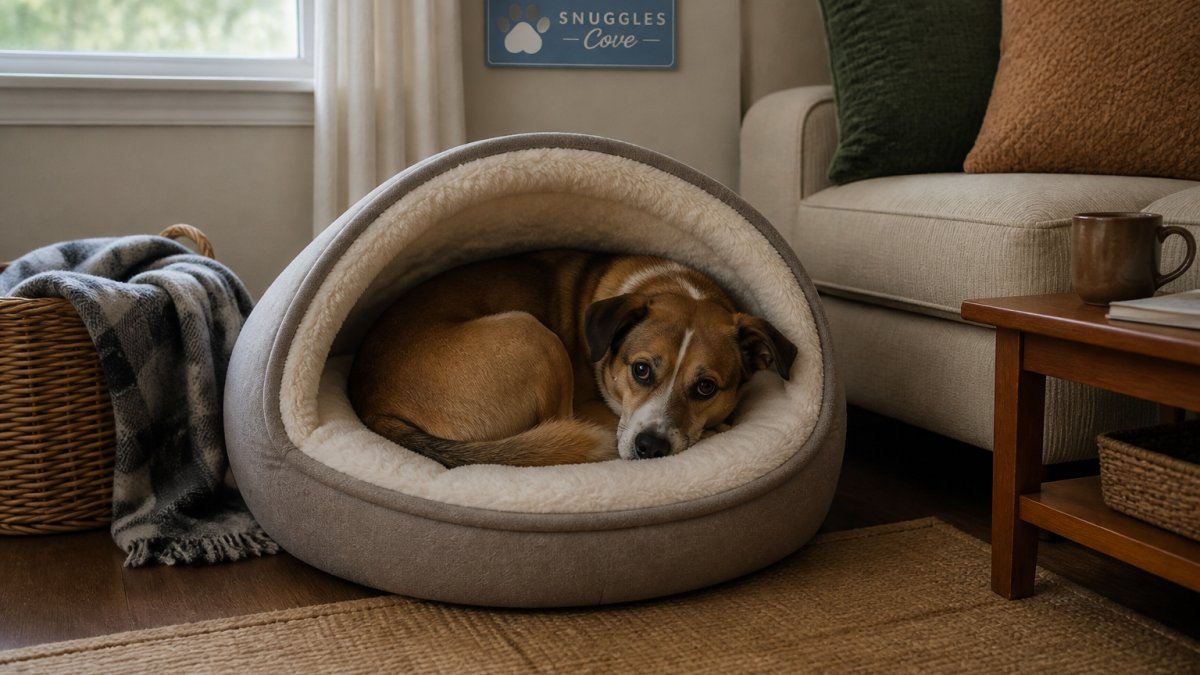
For dogs who love to burrow, a hooded bed with a reinforced structure that stays open gives the enclosed feeling without the trap of a crate.
When a Crate Is Unsuitable for an Anxious Dog
A crate is unsuitable when your dog panics inside it.
Watch for these signs that confinement is backfiring:
- Drooling, especially thick or ropey saliva
- Frantic scratching or digging at the crate door or floor
- Attempts to bite the bars or squeeze through gaps
If your dog injures themselves trying to get out, stop using the crate immediately. Confinement fear is real, and forcing it makes anxiety worse.
If your dog cannot settle in any enclosed space, or the panic continues in an open area, speak to your vet or a qualified behaviourist before pushing further.
Matching the Setup to the Anxiety Trigger
Different triggers call for different setups, not just different locations:
- Separation anxiety: An open bed or gated room near your usual activity, so your dog can see and hear you before you practise short absences.
- Noise fear: A hooded bed or covered crate in an interior room, because the cover muffles sound and blocks visual triggers.
- Stranger anxiety: A gated room or pen with a clear sightline to the door, so your dog can observe visitors without being approached.
If unsure which setup fits, try the least restrictive option for one week and note whether your dog settles faster or slower. The setup that lets your dog choose rest usually works.
3. Make the Space Comfortable, Calm, and Familiar
Comfort turns a spot into a safe place. Add familiar bedding that smells like home, keep fresh water within reach, and place the bed away from draughts. Warmth matters too, especially for smaller dogs and seniors.
5. Dog-Proof the Area: Remove Hazards and Toxic Plants
Dog-proofing means removing anything your dog could chew, swallow, or knock over. Start at floor level and work upward. Power cords and cables are the most common hazard, followed by plastic bags and small objects.
Check for these before your dog spends any time alone:
- Power cords and charging cables tucked into conduit or behind furniture
- Plastic bags, bin liners, and packaging removed
- Toxic plants moved out of reach, including lilies, sago palm, and oleander
If you suspect your dog has eaten something toxic, contact your vet or an animal poison helpline immediately. Do not wait for symptoms.
6. Build Routines That Help Dogs With Separation Anxiety
Helping dogs with separation anxiety comes down to predictability. Feed, walk, and settle your dog in the safe space at the same times each day. Exercise matters more than most owners realise: a 15 to 20 minute walk before alone time burns off excess energy, and pairing the walk with the safe space makes the sequence a cue for calm.
Mr Quack - The World's Best Calming Dog Toy! →
7. Introduce the Space Gradually and Read Dog Anxiety Signs and Triggers
Gradual introduction means your dog chooses the space rather than being placed in it. Here is an anxiety-focused sequence you can follow, adjusting the pace to your dog.
A Step-by-Step Introduction Plan for Anxious Dogs
Work through these stages over one to two weeks, moving on only when your dog is relaxed at the current stage and dropping back if they show stress.
- Day 1-2: Pair the space with good things. Toss a treat into the bed or area while your dog watches, then let them walk in and out freely. Do not close any door. Repeat five to ten times a day.
- Day 3-4: Feed near and then in the space. Put your dog's bowl beside the bed, then inside it. If they eat calmly, the space is starting to predict good things.
- Day 5-7: Add a chew or food toy. Give a long-lasting chew or stuffed food toy in the space while you sit nearby. This builds duration without pressure.
- Day 8-10: Add distance. Step a few feet away, then into the next room for a few seconds, returning before your dog gets worried. Build to one or two minutes.
- Day 11-14: Add duration and real-life noise. Practise while you do normal household tasks, then while you step outside briefly. Keep departures short and boring.
What not to do: do not shut the door on day one, do not place a panicking dog inside and wait for them to "get used to it," and do not use the space only when you leave.
How to Tell Whether the Space Is Helping or Increasing Distress
A safe space is only safe if your dog's behaviour in it improves over time. Judge it on observable signs, not on how the setup looks.
Signs the space is helping:
- Your dog settles within a few minutes of entering
- They choose to rest there without being sent
- They seek the space out when stressed, such as during a storm or when visitors arrive
Signs the space is increasing distress:
- Panic escalates each time your dog is placed there
- Destruction, digging, or escape attempts increase
- Your dog avoids the space entirely or freezes when led toward it
If you see the second list, the setup or location is wrong, not your dog. Change one variable at a time, such as moving the bed to a quieter corner or switching from a crate to an open bed, and give it a few days before judging.
Reading Early Anxiety Signs During Introduction
Watch for early warning signs: lip licking, yawning when not tired, whale eye (showing the whites), tucked tail, pacing, and turning away. These mean slow down or add distance. Severe signs, drooling, trembling, escape attempts, mean stop and reassess the setup.
When to Seek Professional Support
Environmental changes help mild to moderate anxiety, but some dogs need more. Contact your vet or a qualified behaviourist if your dog:
- Injures themselves trying to escape a crate, room, or pen
- Cannot be left alone at all without extreme distress
- Shows anxiety that is getting worse despite consistent gradual introduction
A vet can rule out pain or medical causes that mimic anxiety, and a qualified behaviourist can build a plan around your dog's specific trigger. The safe space is one part of that plan, not a replacement.
Conclusion: Small Changes, Bigger Calm
Building a safe space for anxious dogs rarely happens overnight, and the first setup you try may not work. Start with location, get the bedding and routine right, and adjust based on what your dog tells you.
At SNUGGLES Cove, we designed our hooded bed around exactly this problem.
Get started with SNUGGLES Cove and give your dog a corner that finally feels like theirs.
Frequently Asked Questions
Where should you put a safe space for an anxious dog?
Choose a quiet corner away from doorways, foot traffic, and loud appliances. A spare room, a corner of the living room, or a covered area near where the family gathers often works well. The spot should let your dog see and hear you without being in the middle of activity. For dogs with noise anxiety, a room furthest from the street or front door is usually best. Keep the location consistent so the safe space for anxious dogs becomes predictable rather than something that moves around.
What should you put in a dog's safe space?
Start with a supportive bed, familiar bedding that smells like home, and a water bowl within reach. Add one or two engaging toys such as a chew toy or a frozen enrichment toy, plus something with your scent like an old t-shirt. Keep the area uncluttered so your dog can settle without tripping over objects. If your dog likes to burrow, a hooded bed with a reinforced hood that stays open gives them the covered feeling without the hood collapsing on them.
How do you introduce a dog to a new safe space?
Introduce it gradually and pair it with positive experiences. Toss treats inside, feed meals nearby, and let your dog explore at their own pace without closing them in. Start with short sessions of a few minutes and build up. Never force your dog into the space or use it as punishment, because that creates a negative association. If your dog backs away, walks off, or refuses treats, slow down and try again later with higher-value rewards.
Can a safe space help a dog with noise anxiety?
Yes, when it is set up correctly. A quiet room away from windows, plus familiar bedding and a covered bed, can reduce exposure to the sights and sounds that trigger fear. Adding background sound can mask outside noise. The space works best when your dog already associates it with calm before the noise starts, so build the positive association on ordinary days rather than only during storms or fireworks. If your dog panics despite the setup, speak to your vet.
How can you tell if the safe space is helping or increasing distress?
Look at what your dog does in the space. Signs it is working include settling within a few minutes, lying down with relaxed body posture, choosing to go there on their own, and sleeping. Signs it is not working include pacing, panting, drooling, digging at the floor or door, barking, or trying to escape. If your dog shows distress every time they are placed there, the setup or the type of confinement may be wrong for them. Stop and reassess rather than pushing through.
