
How to Manage Arthritis in Senior Cats: 7-Step Guide

Table of Contents
- Why Arthritis Changes Everything for a Senior Cat
- Signs of Arthritis in Cats: What Owners Notice First
- Getting a Veterinary Diagnosis and Building a Treatment Plan
- Arthritis Medication for Cats: Safety, Dosing, and Monitoring
- Diet for Cats with Arthritis: Weight, Nutrition, and Joint Supplements
- Home Care for Cats with Arthritis: A Room-by-Room Plan
- Tracking Pain and Treatment Response Over Time
- When to Seek Veterinary Care and What to Expect Long Term
- Frequently Asked Questions
Last Updated: October 14, 2026
Why Arthritis Changes Everything for a Senior Cat
Learning how to manage arthritis in senior cats starts with one fact: it is a painful, progressive joint disease that quietly reshapes daily life. Learning how to manage arthritis in senior cats starts with one hard truth: cats hide pain well, so the problem is usually advanced before anyone notices. Stiff joints change how a cat moves, eats, sleeps, and uses the litter box. The good news?
Signs of Arthritis in Cats: What Owners Notice First
The first signs of arthritis in cats are subtle: less jumping, slower movement, and a cat that sleeps more than usual. Owners often describe it as their cat "getting old." In reality, these are classic pain signals. Watch for changes in how your cat walks, where it sleeps, and whether it still greets you at the door.
Mobility Changes You Can Spot at Home
Mobility changes are the clearest early clue. Look for:
- Hesitation before jumping onto a sofa or windowsill
- Shorter, stiffer strides, especially after rest
- Trouble climbing stairs or getting onto the bed
- Sitting instead of crouching to eat
- Less grooming, especially on the back and hindquarters
A cat that once leapt onto counters may now pause and walk away. That pause is pain, not laziness.
Behavior and Toileting Changes That Point to Pain
Behavior changes often show up before limping does. A painful cat may:
- Hide more or avoid being picked up
- Growl or hiss when touched near the hips
- Miss the litter box or pee outside it
- Cry at night or pace restlessly
A feline health resource from the Cornell Feline Health Center notes that litter box avoidance is one of the most common signs owners report. If your cat stops using the box, joint pain is a likely cause.
Getting a Veterinary Diagnosis and Building a Treatment Plan
A veterinary diagnosis is the only way to confirm arthritis and rule out other conditions. Your vet will start with a physical examination, feeling each joint for swelling, heat, and reduced range of motion. They may also recommend radiographs to see joint changes directly. Bloodwork often comes first, to check organ function before any medication starts. From there, you build a treatment plan together.
A good plan usually includes four parts:
- Pain control with prescription medication
- Weight management to reduce joint load
- Supportive therapies like joint supplements
- Home changes that make daily life easier
No single step works alone. The best results come from stacking them.
Arthritis Medication for Cats: Safety, Dosing, and Monitoring
Arthritis medication for cats must always come from a veterinarian. Cats process drugs differently than dogs or people, so human painkillers like ibuprofen and acetaminophen are toxic and can be fatal. Never give your cat a medication that was not prescribed for it. Even over-the-counter supplements can interact with prescriptions, so tell your vet everything your cat takes.
Common prescription options include:
- Buprenorphine, often used for short-term or breakthrough pain
- Gabapentin, which helps with chronic pain and can ease night restlessness
- Meloxicam, used carefully under close vet supervision
- Amantadine, sometimes added for chronic pain that responds poorly to other drugs
How to Discuss Medication Choices with Your Vet
Start by describing your cat's worst days, not just the average. Vets need to know how often pain interferes with jumping, eating, grooming, and litter box use. Ask about the goal of each medication: Is it for immediate relief, long-term control, or both?
A practical tip: ask your vet to write down the medication name, dose, frequency, and what to do if you miss a dose. Keep a copy on the fridge.
Monitoring for Side Effects and Pain Relief
Monitoring is not optional. After starting a new medication, note your cat's behavior for the first few days. Watch for:
- Vomiting, diarrhea, or loss of appetite
- Increased drinking or urination
- Lethargy or unusual hiding
- Changes in grooming or litter box habits
If you see any of these, call your vet before giving the next dose. Never adjust the dose on your own.
Pain relief is measured by function, not by how your cat looks. A cat that starts jumping onto the sofa again, or stops crying at night, is likely getting relief. A cat that still hesitates or hides may need a different plan. Use a simple daily log to track jumping, walking, grooming, and litter box use.
Diet for Cats with Arthritis: Weight, Nutrition, and Joint Supplements
Diet for cats with arthritis comes down to one goal: a healthy weight. Extra pounds put more stress on sore joints, and even a small amount of weight loss can improve mobility. Your vet can score your cat's body condition and set a target weight.
Joint supplements are worth discussing, but they are not a cure. Look for products with glucosamine, chondroitin, or omega-3 fatty acids. Ask your vet which ones fit your cat's health history.
| Goal | What to Do | Why It Helps |
|---|---|---|
| Healthy weight | Measure food, cut treats | Less load on sore joints |
| Joint support | Add vet-approved supplements | May ease stiffness |
| Steady nutrition | Keep a fixed feeding routine | Prevents weight swings |
Home Care for Cats with Arthritis: A Room-by-Room Plan
Home care for cats with arthritis is where owners see the fastest wins. Small changes remove daily obstacles and let your cat move with less pain. Walk through your home room by room and fix what hurts.
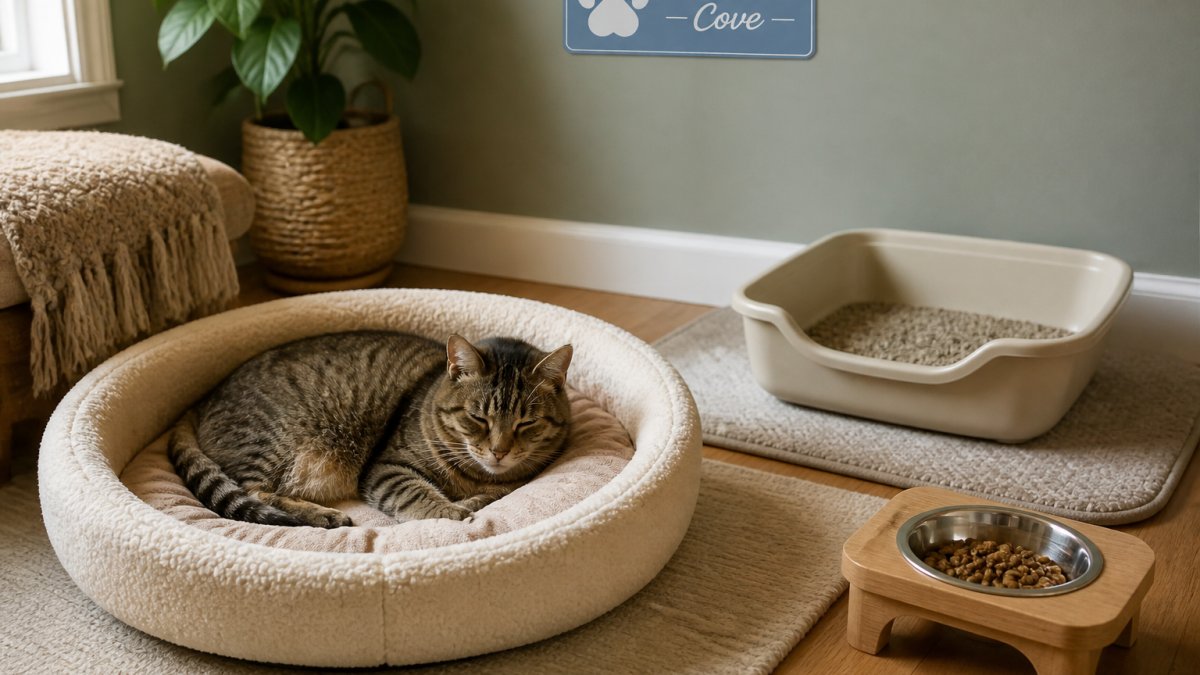
Priority 1: Litter Box Access
Litter box problems are the number one reason owners seek help. A stiff cat may not be able to climb into a high-sided box or squat comfortably. Fix this first.
- Entry height: Switch to a low-entry box, ideally with a lip no higher than 2-3 inches. You can also cut a U-shaped opening in the side of a plastic storage bin.
- Size: Choose a box large enough for your cat to turn around easily. Many senior cats prefer a box that is at least 1.5 times their body length.
- Placement: Put a box on every floor your cat uses. If stairs are hard, keep a box on the main living level.
- Litter type: Use soft, unscented, clumping litter. Avoid crystals or pellets that can hurt sore paws.
- Cleaning: Scoop at least once daily. A dirty box is harder to use and can cause avoidance.
If your cat still avoids the box, try a puppy pad or a low-sided tray as a temporary alternative. Always tell your vet about litter box changes.
Priority 2: Food and Water
Crouching to eat puts strain on the neck, shoulders, and hips. Raise bowls so your cat can eat with a neutral neck position. A simple stack of books or a small box works. Use wide, shallow bowls so whiskers don't touch the sides. Keep water fresh and consider a pet fountain to encourage drinking, which is important for kidney health in senior cats.
Priority 3: Resting and Sleeping
Arthritic cats need soft, supportive bedding. Look for a bed with a low entry and a raised rim for head support. Heated beds can soothe stiff joints, but choose one designed for pets with a chew-resistant cord. Place beds in warm, draft-free spots your cat already chooses. If your cat sleeps on your bed, add a low ramp or steps so they can get up without jumping.
Priority 4: Mobility Around the House
- Ramps and steps: Place low ramps or steps near the sofa, bed, and favorite windowsill. Make sure they have non-slip surfaces.
- Flooring: Add non-slip mats or runners on hard floors. This gives your cat confidence to walk without slipping.
- Doorways: Keep doors open or use pet gates with low thresholds so your cat doesn't have to jump over them.
- Climbing: If your cat loves high perches, provide a series of steps or a cat tree with wide, close-together platforms.
Priority 5: Grooming and Hygiene
Arthritic cats may stop grooming hard-to-reach areas. Gentle daily brushing helps prevent mats and gives you a chance to check for sore spots. If your cat can't reach the litter box to clean themselves, use pet-safe wipes on the hindquarters. Keep nails trimmed to prevent ingrown nails, which are more common when cats move less.
Tracking Pain and Treatment Response Over Time
Tracking pain and treatment response turns guesswork into clear data. Cats cannot tell you how they feel, so you watch and record. Use a simple weekly score for four things: jumping, walking, grooming, and litter box use. Rate each from 1 to 5. Over a few weeks, the pattern shows whether treatment is helping.
When to Seek Veterinary Care and What to Expect Long Term
Seek veterinary care right away if your cat stops eating, cries out, cannot stand, or suddenly cannot use the litter box. These can signal a crisis, not routine arthritis. For ongoing care, expect regular check-ins.
Long term, the goal is comfort and quality of life. A warm, supportive bed helps them rest without pain, and easy access to food, water, and the litter box keeps their routine calm.
Frequently Asked Questions
What are the signs of arthritis in senior cats?
The most common signs include reduced jumping, difficulty climbing stairs or furniture, stiffness after rest, and lameness that shifts between legs. Many cats also stop grooming hard-to-reach areas, sleep more, and become reluctant to use a litter box with high sides. Because cats hide pain well, these behavior changes are often the first clue. A veterinary examination and radiographs confirm the diagnosis.
What home care for cats with arthritis makes the biggest difference?
Start with warmth and easy access. Place soft bedding in low, draft-free spots, raise food and water bowls so your cat does not have to crouch, and switch to a low-entry litter box. Keep everything your cat needs on one floor to reduce stair use.
Can arthritis medication for cats be given safely at home?
Yes, but only under veterinary guidance. Prescription options such as buprenorphine and gabapentin are commonly used for pain relief, and your vet will set the dose based on weight and kidney and liver function. Never give human painkillers like ibuprofen or paracetamol to a cat. Monitor for drowsiness, vomiting, or appetite changes and report them promptly.
What is the recommended diet for cats with arthritis?
Weight management is the priority. Your vet will assess body condition and set a target weight, then recommend a diet that supports gradual loss if needed. Joint supplements containing omega-3 fatty acids or glucosamine are often added. Feed measured portions, keep treats under 10 percent of daily calories, and recheck weight every four to six weeks.
Arthritis in senior cats is manageable, but it takes a plan that covers pain, weight, and home comfort together. At SNUGGLES Cove, we built our bed to support exactly that: a reinforced plush hood that stays open for warmth and security, removable washable covers for easy cleaning, and a design that adapts to how your cat actually sleeps. If your senior cat needs a softer, warmer place to rest, shop the SNUGGLES Cove and give them the comfort their joints deserve.
