
Best Cave Beds for Timid Cats: A 2026 Guide

Table of Contents
- Why Cave Beds Work for Timid Cats
- Understanding Calming Cat Beds for Anxiety
- Material Types: What Makes the Difference
- How to Help a Timid Cat Adjust to a Cave Bed
- Placement Strategy and Environmental Enrichment
- Cat Cave Bed Maintenance and Cleaning
- Choosing the Right Size and Design for Your Cat
- The SNUGGLES Cove: Engineered for Anxious Cats
- Frequently Asked Questions
Last Updated: September 30, 2026
Why Cave Beds Work for Timid Cats
Cave beds for timid cats deliver security by mimicking enclosed spaces where cats naturally retreat when anxious, creating a psychological safe haven that reduces stress and encourages rest.
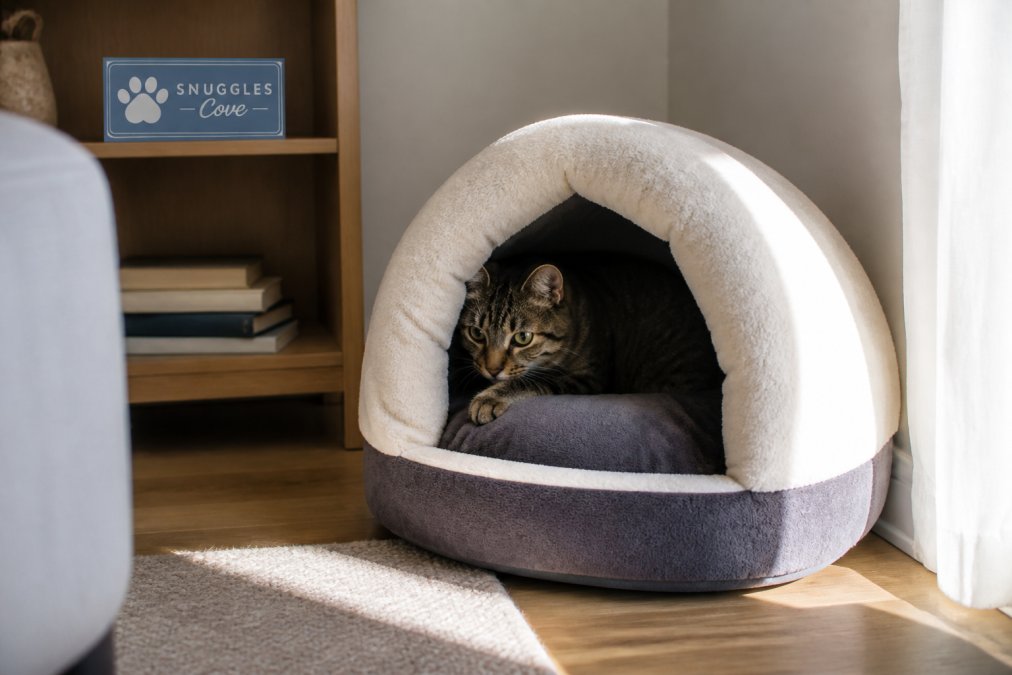
Cats have a denning instinct rooted in survival biology, and cave beds for timid cats satisfy this instinct indoors. A well-designed cave bed satisfies this instinct indoors, providing territorial security. When a timid cat has access to a proper hiding spot, behavioral changes follow: less hiding under furniture, more relaxed posture, and improved sleep patterns.
The enclosed design also traps warmth naturally, reducing the energy a timid cat expends staying comfortable and freeing mental resources for relaxation.
Understanding Calming Cat Beds for Anxiety
Calming cat beds for anxiety work by addressing the root cause of stress: lack of control. A cave bed restores agency by giving the cat a space they control completely.
A reinforced hood that stays open maintains the enclosed feeling without trapping the cat. A hood that collapses or feels confining will cause the cat to avoid the bed entirely.
Placement amplifies the calming effect. Position the bed in a quiet corner away from high-traffic areas and loud appliances. Elevated spots help cats feel safer with a view of their surroundings. Dim lighting nearby signals safety without creating isolation.
Pair the cave bed with predictable routines, consistent feeding times, and minimal sudden changes. The bed becomes part of a larger system of reassurance rather than a standalone solution.
Material Types: What Makes the Difference
The materials you choose determine whether a cave bed provides genuine comfort or becomes an expensive decoration your cat ignores.
Natural Wool and Felt
Wool requires careful hand washing or gentle machine cycles to prevent felting or shrinkage.
Orthopedic Foam and Memory Foam
Orthopedic foam provides joint support, distributing weight evenly and reducing pressure points.
Plush and Fleece Linings
Plush and fleece linings offer maximum softness and are machine washable, making cleanup simpler for pet owners managing heavy shedding.
Plush materials can compress over time and may not maintain shape as effectively as some other materials, potentially losing structural integrity.
How to Help a Timid Cat Adjust to a Cave Bed
Introducing a timid cat to a cave bed requires patience and positive reinforcement. Timid cats need time to investigate and build confidence.
Start by positioning the bed in a quiet area where your cat already feels safe. If your cat hides under the bed, place the cave bed nearby rather than replacing their hiding spot. Let them approach it voluntarily. Some cats take days or weeks before entering a new structure.
Use familiar scents to build comfort. Place the bed where your cat has already rested, or add bedding that smells like them. Rub the exterior with a cloth that has your scent.
Drop treats near the entrance, then gradually inside the bed. Never force your cat into the space. Voluntary entry and positive association work far better than pressure.
Interactive play leading into the cave bed can trigger curiosity that overcomes caution. A feather toy dangled near the entrance, then inside, often works well.
Watch for stress signals during the adjustment period. Flattened ears, dilated pupils, or tail tucking mean your cat isn't ready. Back off and try again later. Patience here prevents the cave bed from becoming a source of anxiety rather than relief.
Placement Strategy and Environmental Enrichment
Where you position a cave bed determines whether your timid cat will actually use it. Placement strategy is as important as the bed itself, yet most pet owners overlook this entirely.
Corner placement works best. Cats prefer positions with their back protected and a clear view of the room. A cave bed in a room corner, away from doors and high-traffic areas, provides both security and visibility. This positioning satisfies the denning instinct while allowing the cat to monitor their environment.
🐾 The SNUGGLES Cove™ – The 2-in-1 →
Distance from noise sources matters significantly. Position the bed away from washing machines, vacuum storage, loud appliances, or areas where children play. Timid cats need acoustic safety alongside physical security. A quiet room, a bedroom, office, or low-traffic hallway, creates the stress-free environment anxious cats require.
Elevation helps. If possible, place the cave bed on a slightly raised surface or furniture. Cats naturally seek higher ground for safety. Some cave beds come with elevated bases; others work well on low shelves or platforms. Higher positioning gives your cat a psychological advantage and reduces the likelihood of being startled.
Environmental enrichment extends the cave bed's effectiveness. Pair it with other calming elements: a window perch for natural light and bird-watching, scratching posts for stress release, and interactive toys for mental engagement. A timid cat with access to enrichment activities alongside a secure cave bed shows faster behavioral improvement than a cat with only the bed.
Lighting affects usage patterns. Dim, indirect lighting near the cave bed signals safety without creating isolation. Some anxious cats benefit from a small night light in their designated area, which reduces the fear of darkness while maintaining the enclosed feeling.
Cat Cave Bed Maintenance and Cleaning
A cave bed that becomes dirty loses its appeal and comfort. Regular maintenance keeps the bed fresh and ensures your cat continues using it. The specific cleaning approach depends on your bed's materials.
Removable covers simplify maintenance dramatically. Most quality cave beds feature washable covers that come off easily. Machine wash on a gentle cycle with mild detergent, then air dry completely before replacing. This approach handles shedding and odors without damaging the bed's structure.
For beds without removable covers, spot cleaning is necessary. Use a soft brush to remove surface hair, then lightly vacuum. For odors, sprinkle baking soda, let it sit for 15 minutes, then vacuum thoroughly. Avoid harsh chemicals that might irritate your cat's respiratory system or sensitive skin.
Regular maintenance prevents the bed from becoming a source of discomfort. A dirty bed smells unfamiliar and loses the reassuring scent your cat associates with safety. Consistent cleaning keeps the cave bed appealing and hygienic.
Choosing the Right Size and Design for Your Cat
Size matters more than most pet owners realize. A cave bed that's too large feels exposed rather than enclosed. A bed that's too small creates actual confinement rather than cozy security.
Measure your cat's body length and add 4-6 inches. This gives them room to stretch without the space feeling cavernous. A timid cat in an oversized bed doesn't feel the enclosed security they need. A smaller bed proportional to your cat's size creates the psychological safety that reduces anxiety.
Hood design directly impacts effectiveness. A reinforced hood that stays open, not one that collapses or requires manual adjustment, is essential. Your cat needs to enter and exit freely without the hood flopping down unexpectedly. This design feature separates cave beds that work from those that create new stress.
Consider your cat's sleeping style. Some cats curl into tight balls; others stretch out completely. A cat that curls needs a bed with good shape retention and a snug hood. A cat that stretches needs more length and a hood that doesn't restrict movement. Observing how your cat naturally sleeps helps guide the design choice.
For multi-pet households, size becomes more complex. A cave bed sized for a small cat won't work for a large dog, and vice versa.
The SNUGGLES Cove: Engineered for Anxious Cats
The SNUGGLES Cove represents the solution to the problems that plague standard cave beds. After five years of customer feedback, the design addresses every frustration pet owners encounter with competing products.
Frequently Asked Questions
What makes cave beds effective for anxious cats?
Cave beds tap into your cat's natural denning instinct, providing a safe-haven where they feel protected and territorial secure. The enclosed sleeping area reduces visual stimuli and creates a private hideaway that lowers stress hormones. Cats in enclosed spaces experience measurable anxiety reduction because the confined space mimics the secure dens they'd seek in the wild, allowing them to relax without feeling exposed or vulnerable.
How do I introduce my timid cat to a cave bed?
Place the bed in a quiet, low-traffic area where your cat already spends time. Leave the entrance open and don't force your cat inside. Use positive reinforcement by placing treats or a favorite toy near the opening. Some cats need days or weeks for acclimation, so patience is key. Once your cat enters voluntarily, reward the behavior with praise or treats to build confidence and associate the bed with safety.
What's the difference between cave beds for cats and open beds?
Cave beds provide behavioral support through enclosed design, reducing anxiety and creating territorial security that open beds cannot offer. Open beds expose cats to their environment, which can trigger stress in timid animals. Cave beds also provide thermal insulation and a cozy nest feeling. For anxious or skittish cats, the enclosed design is significantly more effective at promoting relaxation and stress-free environments than flat, open alternatives.
Can I wash the cover of a cave bed easily?
Most quality cave beds feature removable, washable covers that come off without tools or complicated processes. Simply unzip or remove the cover and machine wash on a gentle cycle. Check the care instructions for your specific bed, as some covers require cold water or air drying. The SNUGGLES Cove's removable covers are designed for easy cleaning without disassembly of the entire bed structure.
Anxious cats need more than a bed, they need a complete system of security and comfort. The SNUGGLES Cove combines a reinforced hood that actually stays open, washable covers that simplify maintenance, and materials engineered for structural integrity. Get started with the SNUGGLES Cove and watch your timid cat transform from a stress-filled hider into a relaxed, confident companion.
