
Snoozerpet Alternative for Anxious Dogs

Table of Contents
- Why Anxious Dogs Need the Right Bed
- Best Calming Dog Beds: What Separates Good From Great
- Covered Dog Bed for Anxiety: How Enclosed Spaces Help
- How to Choose a Calming Dog Bed: Selection Criteria That Matter
- Anxiety Wraps for Dogs and Complementary Tools
- Common Mistakes When Buying a Calming Bed
- Making the Right Choice for Your Nervous Dog
- Frequently Asked Questions
Last Updated: October 11, 2026
Why Anxious Dogs Need the Right Bed
Anxious dogs need a refuge, not just a sleeping surface. The wrong bed leaves them hypervigilant and unsettled; the right one signals safety and allows genuine rest.
A Snoozerpet alternative for anxious dogs addresses a specific problem: most standard beds leave nervous dogs exposed and unsettled. They need enclosure, support, and materials that signal safety. This is where design matters more than price.
The difference between a calming bed and a useless one comes down to three things: hood reinforcement, washable covers, and joint-supporting cushioning. We'll show you what separates good from great and which mistakes to avoid.
Best Calming Dog Beds: What Separates Good From Great
The best calming dog beds share core features that anxious dogs actually respond to. It's not about aesthetics or brand names, it's about construction, materials, and whether the design survives real-world use.
The Hood That Actually Stays Open
Most enclosed beds fail because the hood collapses after weeks, and your dog stops using it.
A hood needs internal structure, not just fabric. When evaluating a Snoozerpet alternative for anxious dogs, push the hood gently, it should hold its shape, not flop down immediately.
An open hood lets anxious dogs peek out while feeling enclosed. A collapsed hood defeats the purpose. The SNUGGLES Cove design uses reinforced plush construction that maintains shape through months of daily use.
Removable, Washable Covers for Easy Care
Look for covers that pull off completely and fit in a standard washing machine, no zippers or hand-washing. When your anxious dog has accidents or vomit, a removable, machine-washable cover is essential maintenance, not a luxury.
Memory Foam Support for Joint Health
Memory foam conforms to your dog's body and distributes pressure evenly. Quality memory foam holds its shape through years of use.
| Feature | Why It Matters | Red Flag |
|---|---|---|
| Reinforced hood | Stays open for security without collapse | Hood flops down after a few uses |
| Removable covers | Easy cleaning and hygiene maintenance | Covers sewn on permanently |
| Memory foam | Supports joints and provides comfort | Thin foam over hard base |
| Plush fabric | Soft texture calms anxious dogs | Scratchy or cheap materials |
Covered Dog Bed for Anxiety: How Enclosed Spaces Help
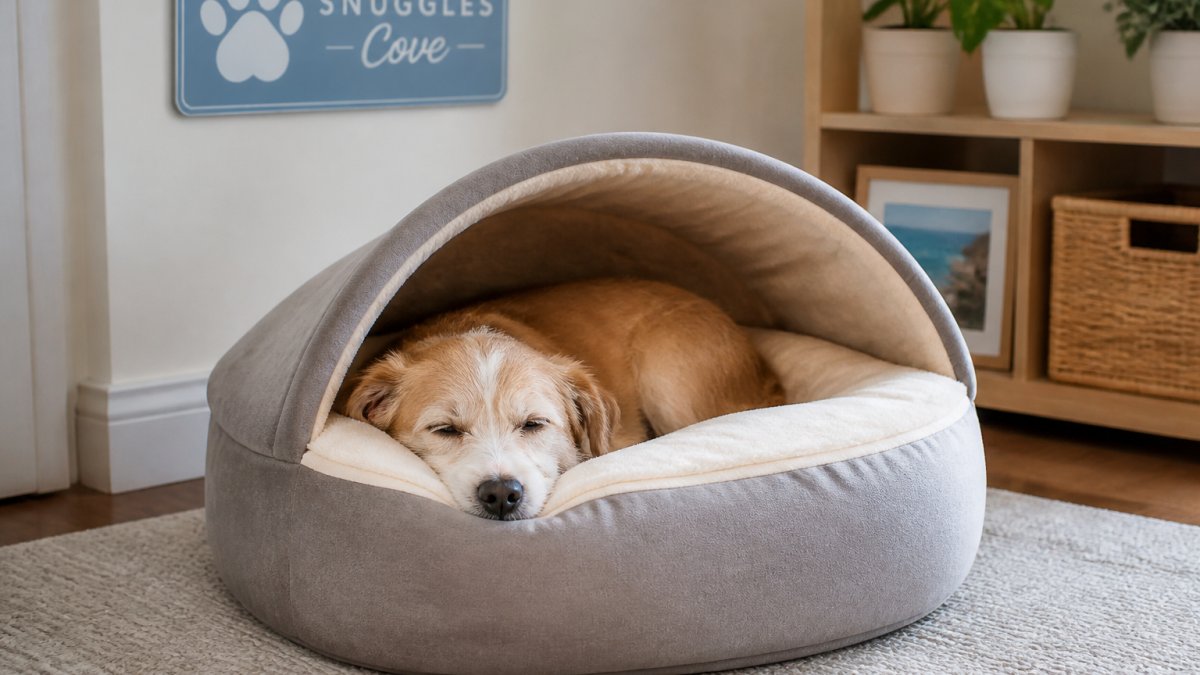
Anxiety in dogs often stems from feeling exposed and vulnerable. An open bed leaves your dog scanning the room constantly, never truly relaxed. A covered bed with an open hood changes their neurological state.
Cocooning and Burrowing Instincts
Dogs have a hardwired instinct to burrow and create enclosed spaces. A covered Snoozerpet alternative for anxious dogs taps into this instinct, the hood signals safety, the sides contain the space, and your dog's nervous system registers protection. Anxious dogs often take to covered beds immediately because they're finally getting the environment their instincts demand.
Security Without Feeling Trapped
The best covered beds balance enclosure with visibility, the hood stays open so your dog can see the room while the sides provide protection. When evaluating a bed, ask: Can they see out? Move freely? Exit in under two seconds? If not, it's too enclosed.
How to Choose a Calming Dog Bed: Selection Criteria That Matter
Choosing the right bed requires matching three variables: your dog's size, your dog's specific anxiety triggers, and the bed's construction quality. More importantly, it requires understanding which bed style suits which anxiety behavior, because not every anxious dog benefits from the same design.
Match Bed Style to Your Dog's Anxiety Behavior
Anxious dogs display different coping behaviors, and the bed style that helps one dog may frustrate another. Understanding your dog's pattern is the first step.
Cave or Covered Beds (like Snoozerpet-style designs with hoods) work best for dogs that burrow or hide when stressed.
Donut or Bolster Beds (raised edges, no hood) suit hypervigilant dogs that pace or scan the room. The raised edges provide containment without blocking sightlines.
Elevated or Raised Beds help dogs that overheat easily or feel vulnerable on the ground, and suit multi-pet households where dogs need physical separation.
Size and Fit for Your Dog's Frame
A bed that's too small forces your dog into an uncomfortable position and defeats the calming effect. A bed that's too large feels less secure, your dog doesn't fill the space, so the enclosure effect diminishes.
Measure your dog lying in their natural sleeping position, from nose to tail base, then add 6-12 inches. Small dogs need 24-30" long; medium 30-40"; large 40-50"; extra-large 50-60". When in doubt, go larger. For covered beds, the hood should extend at least 8-10 inches into the interior.
Fabric Durability and Washability
The fabric you choose affects both comfort and longevity. This matters more for anxious dogs because they may have accidents, vomit, or shed heavily during stressful periods.
Plush Polyester is the most practical choice for anxious dogs, it survives dozens of wash cycles without degrading or trapping odors. Faux Fur calms through texture but traps hair and odors. Microsuede is stain-resistant but can be slippery for dogs with joint issues. Cotton Blends are breathable but less plush. Test fabric by imagining 20+ annual washes, the best beds use high-quality plush that survives without pilling or fading.
Hood Design and Construction Quality
This is where most beds fail and where the difference between a Snoozerpet and inferior alternatives becomes obvious.
The hood needs internal reinforcement, a structural frame or rigid stitching pattern, not just fabric draped over the bed's edge.
When inspecting a bed:
- Pick up the hood and test it. Push it down gently with your hand. Does it spring back to its original shape within 2-3 seconds? Or does it stay compressed?
- Look at the stitching. Is the hood stitched to a frame, or is it just fabric attached at the edges?
- Feel the hood's interior. Is there a wire, plastic, or reinforced seam running along the top edge? This is what keeps it open.
- Imagine your dog pushing their head up inside the hood. Would it collapse, or would it maintain its shape?
A hood that stays compressed won't provide the psychological benefit your anxious dog needs.
Mr Quack - The World's Best Calming Dog Toy! →
The SNUGGLES Cove design uses reinforced plush construction with internal stitching that maintains shape through hundreds of uses. Real customers report their hoods still stand firm after months of daily use.
Anxiety Wraps for Dogs and Complementary Tools
A covered bed is the foundation for anxious dogs, but anxiety is multifaceted. Different dogs respond to different sensory inputs, and layering complementary tools often produces better results than a bed alone. Understanding which tools address which anxiety mechanisms helps you build an effective routine.
How Anxiety Wraps Complement a Calming Bed
Anxiety wraps apply gentle pressure. Use wraps during the day or stressful events (thunderstorms, vet visits) for portable security. Combine a covered bed with a daytime anxiety wrap for maximum effect, your dog wears the wrap during high-stress periods and rests in the bed at night, creating consistent sensory reinforcement.
Mental Enrichment and Engagement Tools
Enrichment provides mental security alongside the bed's physical security. Frozen treat toys keep your dog engaged while resting. Long-lasting chews can be engaging for pacing dogs. Puzzle feeders slow consumption during stressful periods. Scent-based comfort items (familiar blankets or worn clothing) can be placed in the bed.
Behavioral Pairing: Bed + Routine + Tools
The most effective anxiety management combines a physical space (the bed), a consistent routine, and complementary sensory tools. Here's how they work together:
- Physical Security (Bed): The covered bed provides a refuge that signals safety through enclosure and containment.
- Sensory Input (Wrap or Pressure): An anxiety wrap or weighted blanket adds gentle pressure that calms the nervous system.
- Mental Engagement (Enrichment): A chew toy or frozen treat keeps your dog's mind occupied, preventing rumination on anxiety triggers.
- Routine Consistency: Using these tools at the same time each day creates predictability, which anxious dogs crave.
For example: Your dog wears an anxiety wrap during the afternoon, then settles into their covered bed at 5 PM with a frozen treat toy. This routine signals to their nervous system that this time is safe and predictable. Over weeks, your dog begins to anticipate this routine and settles more quickly.
What Beds and Tools Cannot Do
It's critical to understand the limits of these tools. A covered bed, anxiety wrap, and enrichment toys can help an anxious dog feel more secure and settle more easily. They create conditions for calm.
If your dog has severe separation anxiety, panic attacks, or anxiety that interferes with daily function, these tools should complement, not replace, professional guidance.
A bed helps a nervous dog rest. Use it as part of a comprehensive approach that may include training, environmental management, and professional support when needed.
Common Mistakes When Buying a Calming Bed
Most pet owners make predictable errors when choosing a Snoozerpet alternative for anxious dogs.
First mistake: choosing based on price alone. A cheap bed collapses after weeks. Your anxious dog stops using it.
Second mistake: buying a bed that's too enclosed. Your dog feels trapped instead of secure.
Third mistake: ignoring washability. Pet beds get dirty. A cover you can't remove becomes unusable within months.
Fourth mistake: underestimating the hood's importance. Many buyers focus on the base and ignore the hood structure.
Fifth mistake: choosing the wrong size. A bed that's too small is uncomfortable.
Making the Right Choice for Your Nervous Dog
Selecting a calming bed for an anxious dog isn't complicated, but it requires understanding what actually calms your dog's nervous system. Enclosure creates security. Quality materials create comfort.
A Snoozerpet alternative for anxious dogs that delivers on all three fronts will transform your dog's behavior.
The SNUGGLES Cove bed addresses each of these requirements through five years of customer feedback and refinement. The reinforced hood stays open. The removable covers wash easily.
For anxious dogs, the right bed isn't a luxury, it's beneficial. Your dog's nervous system needs a space that signals safety. When you provide that, everything changes.
Frequently Asked Questions
What features should I look for in a calming dog bed for anxiety?
Look for an enclosed or covered design with a hood that stays open and doesn't collapse, soft plush fabrics for comfort, removable and washable covers for hygiene, cushioning or memory foam for joint support, and a size that fits your dog's frame without being too large. The hood should create a sense of security while allowing your dog to enter and exit freely. High sides or bolsters also help anxious dogs feel contained and safe.
Can a covered dog bed help an anxious dog feel safer?
Yes. Covered or enclosed beds tap into dogs' natural burrowing and cocooning instincts, which provide comfort and security. The enclosed space reduces visual stimulation and creates a den-like refuge where nervous dogs can retreat. However, the hood must stay open and not trap your dog, a collapsing hood defeats the purpose. A well-designed covered bed gives anxious dogs a sense of control over their environment, helping them relax and sleep better.
Do anxiety wraps for dogs actually work, and how do they compare to a calming dog bed?
Anxiety wraps apply gentle, sustained pressure that some dogs find calming. They work best for situational anxiety like thunderstorms or fireworks. A calming dog bed offers a different benefit: a safe resting space where your dog can retreat and feel secure throughout the day and night. Many pet owners use both together, the wrap for acute stress and the bed for ongoing comfort and sleep quality.
How do I know a dog bed hood will actually stay open and not collapse like other beds?
Check the hood's construction: reinforced stitching, sturdy fabric, and a design that props the hood open rather than relying on it to balance on its own are key. Read customer reviews specifically about hood durability and whether it flops down after a few weeks. Ask the seller about the hood's design, does it have internal support or a stay mechanism? Beds with reinforced plush hoods that are designed to maintain their shape are more reliable. SNUGGLES Cove's hood, for example, is reinforced to stay open consistently.
Your anxious dog deserves a bed that actually calms, not just contains. Shop The SNUGGLES Cove and discover how a reinforced hood that stays open, removable washable covers, and memory foam support transform your nervous dog's sleep and security. Get started with SNUGGLES Cove and give your pet the refuge they need.
