
Rescue Dog Separation Anxiety: Why It Happens & How to Help

Table of Contents
- Why Does My Rescue Dog Have Separation Anxiety?
- Signs of Separation Anxiety in Dogs: What to Watch For
- Separation Anxiety vs. Settling In: How to Tell the Difference
- How to Train a Dog to Be Alone: A Staged Approach
- Your Separation Anxiety Training Plan, Step by Step
- When to Call Your Vet or a Behavior Professional
- Conclusion
- Frequently Asked Questions
Last Updated: October 21, 2026
Why Does My Rescue Dog Have Separation Anxiety?
Rescue dog separation anxiety is one of the most common concerns new adopters raise, and the answer is rarely a single traumatic event. At SNUGGLES Cove, we hear from adopters every week who assume their dog was abused.

A dog who has just lost their familiar people, home, and routine has good reason to feel uneasy. Being left alone is one more unknown in a week full of them.
Below, we'll show you exactly how to tell normal settling-in behavior from true distress, and how to build alone-time tolerance step by step.
It's Not Always a Traumatic Past
A rough history is one possible cause, not the default. Many rescue dogs have simply never been taught that being alone is safe.
Think about what changes on adoption day:
- New people, new smells, new sounds
- A different feeding and walking schedule
- Loss of the kennel routine and familiar dogs
- No gradual build-up to solitude
A dog who spent months in a shelter with other dogs nearby may have never been truly alone. Others were surrendered from homes where someone was always present. Neither dog is damaged. Both are out of practice.
Signs of Separation Anxiety in Dogs: What to Watch For
The classic signs of separation anxiety in dogs show up in two places: what your dog does as you leave, and what they do once you're gone. Departure clues matter most.
Watch for these patterns:
- Pacing or panting before you even pick up your keys
- Whining, barking, or howling shortly after the door closes
- Destructive behavior focused on doors, windows, or exits
- House soiling in a dog who is otherwise house-trained
- Drooling or drooling-soaked bedding
- Escape attempts, including scratched door frames
One key detail separates true distress from mild complaint: timing. A dog with separation anxiety usually starts within minutes of your departure and does not settle.
Use a Camera to See What Really Happens
Guessing is the most common mistake we see. Set up a phone or cheap camera and record the first 30 minutes after you leave.
Then review the footage for:
- When distress starts (immediately or after a delay)
- Whether your dog settles at any point
- How long episodes last
- What your dog does with their body (pacing, trembling, frozen at the door)
This footage is your baseline. It's also genuinely useful for a vet or behavior professional later.
Separation Anxiety vs. Settling In: How to Tell the Difference
The difference between separation anxiety and settling in comes down to intensity, timing, and recovery. A settling-in dog may whine for a few minutes, then nap. A dog with separation anxiety escalates and cannot calm down.
Here's a simple comparison:
| Behavior | Normal Settling In | Possible Separation Anxiety |
|---|---|---|
| Whining | Brief, fades within minutes | Continues or escalates |
| Destructive behavior | Rare or mild | Focused on exits and doors |
| House soiling | Uncommon | Regular, even in trained dogs |
| Recovery | Settles and rests | Cannot settle at all |
| Appetite when alone | Eats food toys | Ignores food entirely |
| Timing | Fades over 1-2 weeks | Persists or worsens |
A dog who ignores a stuffed food toy is telling you something important. Genuine distress tends to override appetite.
How to Train a Dog to Be Alone: A Staged Approach
Learning how to train a dog to be alone works best as a gradual, measurable process. The goal is to keep your dog under their distress threshold at every step, then stretch it slowly.
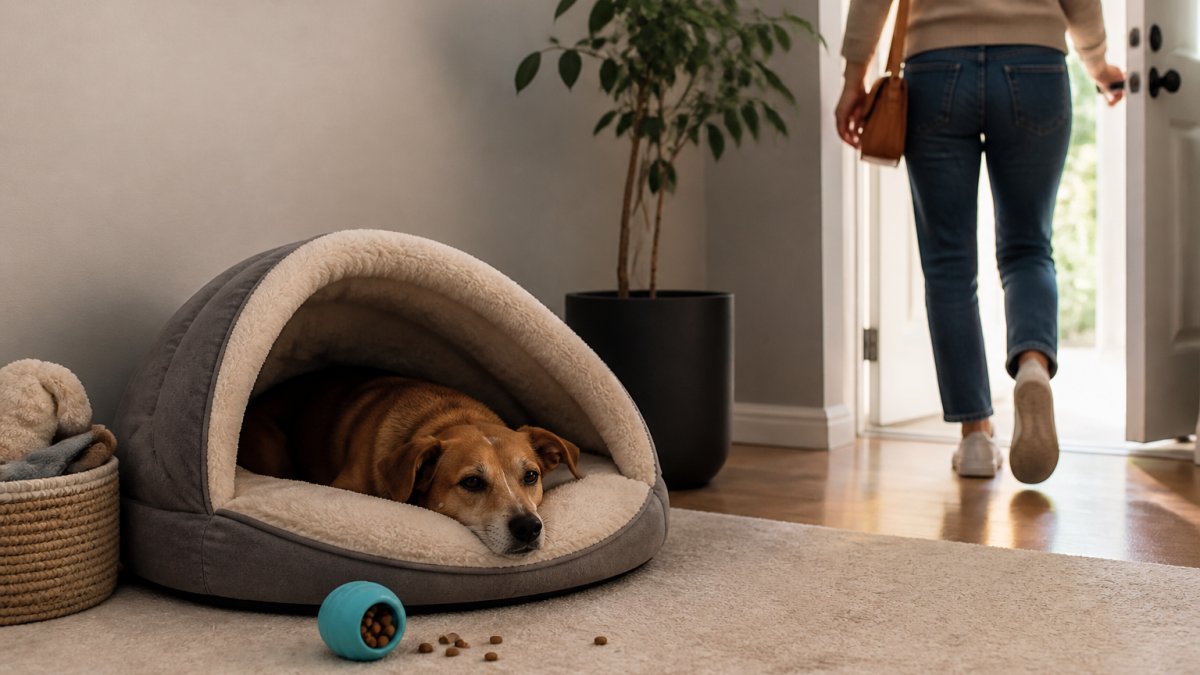
Start With a Baseline, Not a Guess
Before your first training session, record one real absence with a camera. Note the longest duration your dog stayed calm before any distress sign appeared. That number, often 10 seconds to 2 minutes for a dog with true separation anxiety, is your starting point. If you cannot observe a calm window at all, start with departure-cue practice only (picking up keys, putting on shoes, touching the door) and do not leave the house yet.
The Progression Rules
Use these rules to decide every session:
- Start below threshold. Begin at 50% of your dog's longest calm duration. If they stayed calm for 60 seconds, start at 30 seconds.
- Increase by small increments. Add 10-30 seconds per session only after two consecutive calm sessions at the current duration.
- Step back immediately on distress. If your dog whines, paces, or scratches within the absence, end the session and return to the last duration where they were calm for two sessions in a row.
- Cap session length. Keep total training time under 20 minutes per day, split into 3-5 short repetitions.
- Track everything. Log duration, distress signs, and recovery time in a simple notebook or spreadsheet.
A Sample Two-Week Progression
This is a realistic shape, not a guarantee, your dog's starting point may be seconds rather than minutes.
- Days 1-2: Departure-cue practice only. Pick up keys, put on shoes, sit back down. Repeat until your dog stops reacting.
- Days 3-5: Micro-absences of 5-30 seconds. Return calmly. Repeat 5-10 times per day.
- Days 6-9: Extend to 1-5 minutes, adding 10-30 seconds per session only when calm.
- Days 10-14: Work toward 10-15 minutes. Add distance (step outside, close the door) only after duration is stable.
A cozy, enclosed sleeping spot can help here. The SNUGGLES Cove bed has a reinforced plush hood that stays open, giving a nervous dog a protected space to settle in rather than pace. Removable, washable covers make it practical for daily use.
Mr Quack - The World's Best Calming Dog Toy! →
Your Separation Anxiety Training Plan, Step by Step
Here's a separation anxiety training plan you can start this week. Keep sessions short and repeatable.
Step 1: Build a calm departure ritual (Days 1-2). Pick up your keys, put on shoes, then sit back down.
Step 2: Practice micro-absences (Days 3-5). Step out the door for 5 seconds. Return calmly. Repeat several times a day.
Step 3: Extend duration gradually (Week 2). Add 10-30 seconds per session, only when your dog stays calm.
Step 5: Log and review weekly. Track duration, distress signs, and recovery time. Progress is often slow and steady.
When You Can't Avoid Leaving
Real life doesn't pause for training. If you must leave before your dog is ready, reduce the risk.
- Arrange a dog sitter, friend, or daycare for longer absences
- Use a camera to monitor and confirm your dog's state
- Keep departures boring and calm
- Leave enrichment toys and a safe space ready
- Avoid punishing any mess or damage you find on return
Punishment teaches fear, not calm. It can make the next departure worse.
When to Call Your Vet or a Behavior Professional
Some cases need more than a training plan. Call your vet if your dog shows any of these signs:
- Self-injury from escape attempts
- Not eating or drinking while you're away
- Distress that doesn't improve after several weeks of training
- Sudden onset of separation anxiety in an older dog
- Distress that appears alongside other behavior changes (appetite loss, lethargy, house soiling when you're home)
Your vet can rule out pain or medical causes and discuss referral options. A certified behavior professional can build a tailored desensitization plan. As the ASPCA's separation anxiety guidance notes, severe cases often need professional support alongside training.
Why Rescue Dogs Need a Different Timeline
A common mistake is to assume every rescue dog's alone-time struggle reflects a traumatic past. In practice, the rescue-specific factors that matter most are temperament, prior learning, and how long the dog has been in your home. A dog who spent months in a shelter with other dogs nearby may have never practiced being alone; a dog surrendered from a home where someone was always present may simply be out of practice.
Give the adjustment period a realistic window. Most practitioners find that rescue dogs need several weeks to months to settle into a new routine, and alone-time tolerance often improves as the dog's overall sense of safety grows.
How Veterinary Care Complements Training
Veterinary assessment and behavior training are not competing options. A vet visit can rule out medical contributors (pain, thyroid issues, gastrointestinal problems) that mimic or worsen anxiety, and in severe cases a veterinarian may discuss short-term medication to lower your dog's distress enough for training to take hold. Medication is not a substitute for behavior work; it is a bridge that makes the training possible for dogs who cannot otherwise stay under threshold.
For general welfare guidance, the RSPCA's advice on leaving dogs alone is a useful reference for how long dogs can reasonably be left.
Conclusion
Rescue dog separation anxiety is common, understandable, and very often fixable with patience and a staged plan. The key is to assess before you train, keep your dog under their threshold, and track progress honestly.
A calm, protected sleeping space makes the process easier. The SNUGGLES Cove bed offers a reinforced plush hood that stays open, removable washable covers, and a design refined over five generations of customer feedback.
Get started with SNUGGLES Cove and give your rescue dog the cozy, secure base they need to feel safe alone.
Frequently Asked Questions
How can I tell if my rescue dog has separation anxiety or is still settling in?
Timing and intensity are the giveaways. Settling-in behavior eases over the first few weeks as routine builds, and a new dog may simply follow you around or whine briefly at the door. Separation anxiety is different: distress starts within minutes of your departure, repeats every time, and includes panic behaviors like howling, scratching at exits, drooling, or house soiling. A camera recording of two or three absences tells you which pattern you're dealing with, and it's worth doing before you change anything in your training.
How long does it take to help a rescue dog with separation anxiety?
There's no fixed timeline, and anyone promising one is guessing. Progress depends on the dog's history, how long the anxiety has been practiced, and how consistently you run short absences below their threshold. Many dogs show measurable improvement over several weeks of daily alone-time training, starting with seconds and building gradually. Some need longer, especially if medication or a behavior professional is involved. Track your sessions so you can see small gains rather than judging by the worst day.
Should I leave my rescue dog alone while they are settling in?
Keep absences short and predictable in the first weeks. A newly adopted dog is still learning that you come back, so long workdays straight away make anxiety more likely. Arrange leave, daycare, or a sitter for the first stretch where you can, and practice brief departures of a few minutes so being alone becomes normal. Build duration slowly once your dog can stay calm for the current step. If distress appears at any length, you've gone past their threshold and need to shorten the next session.
Can a rescue dog's separation anxiety get better?
Yes, in most cases it improves with a structured plan. Gradual desensitization to your departure cues, counterconditioning with food toys, and a predictable routine give the dog a different emotional response to being alone. Set up a safe space such as a covered bed with a worn t-shirt inside, and use enrichment like a frozen treat toy to pair absences with something good. Severe cases benefit from veterinary assessment, and some dogs need medication alongside training. Improvement is usually gradual, so track the small wins.
This article is general guidance, not veterinary advice. Speak to your vet about your dog's specific needs.
